

A robust design must prioritize bandwidth availability and signal integrity, treating video traffic as a constant, heavy flow that cannot tolerate the retransmissions typical of office data.
The true effectiveness of electronic security lies in real-time visibility and smooth forensic evidence, goals that can only be achieved when the network can sustain peak performance under stress, ensuring that every video packet reaches its destination with the exact timestamp and without degradation.
The most common mistake in electronic security design is spending the budget on ultra-high-definition cameras (4K or higher) while neglecting the backbone of communication: cabling and switching.
Resolution, however high, is worthless if jitter, latency or packet loss corrupt video frames, causing “freezes” or pixelation. Two factors to consider are:
Performance and Forensic Fidelity: System effectiveness depends on a network able to sustain peak performance under stress, guaranteeing the integrity of each video packet, its exact timestamp and smooth playback, both in real time and in forensic analysis.
Scalability and Structural Resilience: The longevity of electronic security demands an infrastructure that combines network engineering (QoS and throughput management) with intelligent storage, ensuring the system grows without collapsing and responds quickly to any recording query.
The structural design of the network is the foundation on which video stability is built. Minimizing points of failure and logical hops is essential to reduce latency.
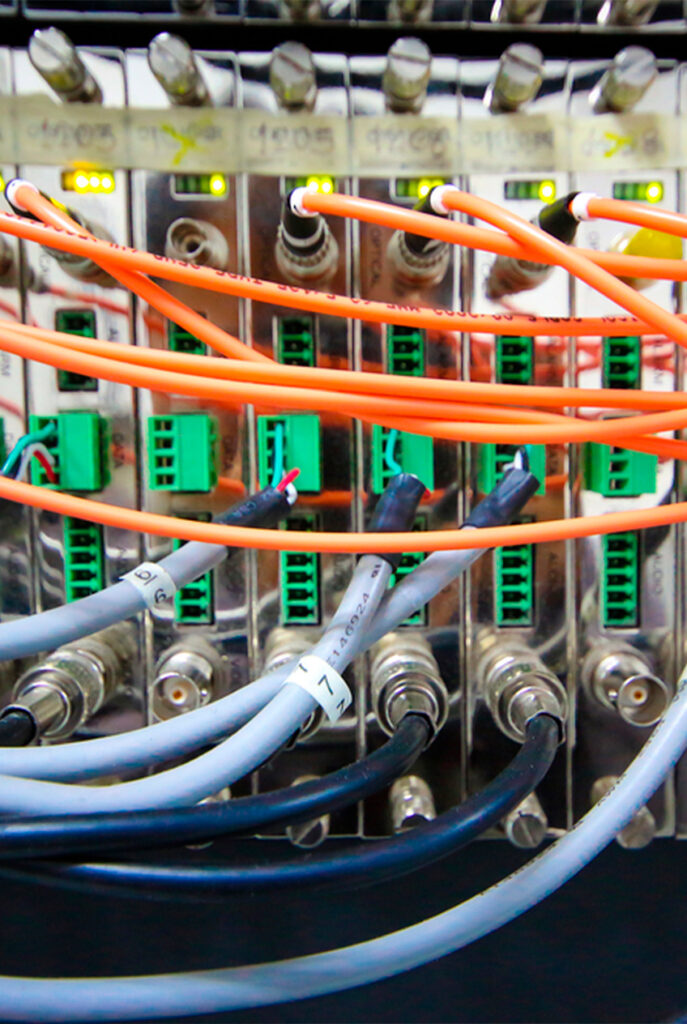
The physical layer is where most failures tend to occur.
Video is resource-“hungry”. A professional design must consider:
The physical layer is where most failures tend to occur.
A network camera is, at the end of the day, a computer. If it is not protected, it is an entry point.